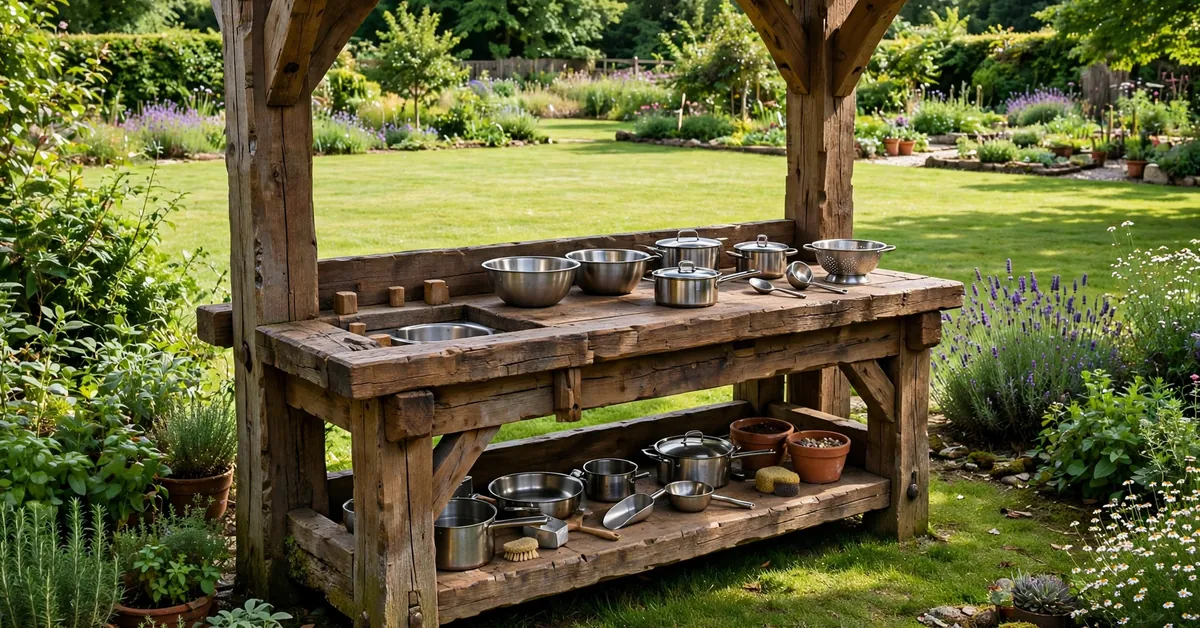
Here’s something nobody tells you when you’re browsing mud kitchens at midnight: most of them are sold as outdoor toys, but a good number are built like indoor ones. They look wonderful in the photos — pale wood, little chalkboard, tiny pots lined up in a row. Then they spend a winter in a real garden, and by spring the doors swell shut, the screws rust, and the whole thing leans like it’s tired.
I’ve built mud kitchens out of pallets and offcuts, and I’ve watched a couple of bought ones slowly give up on our patio. The difference between a kitchen that’s still standing in three years and one that’s firewood by bonfire night is rarely the price tag. It’s the material, a handful of construction details, and whether anyone looks after it.
This guide is about exactly that: what actually survives outside, material by material, so you can buy (or build) once and be done with it.
Why “Outdoor” Mud Kitchens Fail So Fast
Weather doesn’t destroy a mud kitchen in one dramatic moment. It picks at the weak points, in a fairly predictable order:
- Rust. Cheap screws, hinges, and hooks are usually the first to go. Ordinary steel fixings can show rust within a single wet season, and rust stains run down the wood and seize moving parts.
- Rot. Untreated wood that sits in contact with damp soil or holds puddles will soften and rot from the feet up and from any horizontal surface where water pools.
- Fading and chalking. Sunlight bleaches wood to grey and fades plastic. That grey, silvered look on wood is mostly cosmetic — but on plastic, UV damage goes deeper.
- Cracked plastic. Thin plastic goes brittle after repeated hot days and frosty nights. The first crack usually appears around a screw hole or a flexing door, and from there it spreads.
None of this means you need to spend a fortune. It means you need to know which material fails in which way, because each one asks something different of you.
The Materials, Honestly Compared
Pressure-Treated Wood
Pressure-treated (tanalised) timber has preservative forced into the grain, which makes it far more resistant to rot and insects than ordinary wood. It’s the material used for fence posts and decking joists — things expected to live outside for years.
Outside behaviour: The best all-round option for a leave-out-all-year kitchen. It will still weather to grey, and it can crack slightly as it dries, but it resists rot for a long time, including at ground level. It tolerates being hosed down, rained on, and frozen without much complaint.
The catch: Heavier and usually pricier. The cut ends of treated timber are less protected than the factory surfaces, so a coat of end-grain preservative on fresh cuts is a good habit if you’re building or modifying.
Untreated Pine
This is what most budget wooden mud kitchens are made from. It’s light, cheap, easy to work — and it has almost no natural defence against rot.
Outside behaviour: Left untreated and uncovered, pine starts to suffer quickly: joints swell, surfaces blacken with mildew, feet rot where they touch wet ground. I’ve seen an untreated pine kitchen look genuinely tatty within a year.
The catch: It’s not a hopeless material — it’s a maintenance commitment. Two coats of exterior wood paint or a good outdoor oil before first use, kept under a cover, and lifted off the soil, and pine can give you several decent years. Just buy it knowing that the work is part of the deal.
Plastic
Thick, moulded plastic kitchens shrug off rain completely and never rot. They’re light enough to drag indoors, and they hose clean in seconds.
Outside behaviour: Water is not the enemy — the sun is. UV makes plastic fade and, over a few years, go brittle. Thin, cheap mouldings crack at stress points; thicker, better-quality plastic lasts considerably longer. Dark colours fade fastest.
The catch: Plastic kitchens are usually smaller, lighter (so easier to tip — more on that below), and less repairable. A cracked wooden shelf can be replaced with a spare plank. A cracked plastic shell is, mostly, the end of the kitchen.
Metal
Full metal mud kitchens are rare. What you’ll actually encounter is metal in parts: stainless steel bowls and sinks (excellent — effectively indestructible), powder-coated steel frames, and cheap chrome or zinc fixings (the weak link).
Outside behaviour: Stainless steel bowls are the single best sink option outdoors. Powder-coated frames do well until the coating chips, at which point rust creeps underneath. Bare or cheaply plated steel rusts fast and stains everything it touches.
The catch: Treat “metal” as a supporting material. Judge a kitchen by its bowls and fixings, not by a metal label.
The Construction Details That Decide Everything
Two kitchens can be made of the same wood and have completely different lifespans. Here’s why:
- Roof or cover options. A canopy keeps the worst of the rain off the worktop and gives kids shade. Even better for longevity is a simple waterproof cover thrown over the whole thing in winter — boring, unglamorous, and probably the single cheapest year of extra life you can buy.
- Drainage. Look at the shelves and worktop. Solid horizontal surfaces pool water. Slatted shelves drain freely, and a sink bowl that lifts out can be emptied and dried. If you’re adding a tap or water play, a kitchen designed around it handles the constant wetness better mud kitchen with running water.
- Raised feet. Wood should never sit directly on soil or a damp patio if you can help it. Feet raised even a couple of centimetres — on paving slabs, bricks, or plastic feet caps — break the constant contact with ground moisture that starts rot.
- Fixings. Stainless steel or properly coated outdoor screws and hinges are worth paying for. This is the detail manufacturers cut first and the one that fails first.
The Main Types You’ll See
The Large Wooden Kitchen With a Canopy
The classic “proper” mud kitchen: a solid worktop, shelves, a canopy or roof overhead, room for two or three children side by side. Usually pressure-treated or painted wood.
Best for: Families who want it as a permanent garden fixture, siblings playing together, and anyone who wants the kitchen left out year-round with minimal fuss. This is the type that most justifies its price, because the materials tend to match the size.
The Compact Plastic Kitchen
Small, light, often in bright colours, with a little hob and sink moulded in. Half the size of the wooden ones, and usually a fraction of the price.
Best for: Toddlers, balconies, small patios, and grandparents’ houses. Also a sensible first kitchen if you’re not yet sure your child will take to mud play. Accept that it’s a two-to-three-year toy rather than a garden fixture, store it under cover or indoors over winter, and it does its job well.
The DIY Pallet Build
The “buy” alternative that isn’t really buying: one or two pallets, some screws, a washing-up bowl, and a Saturday. Pallet wood is usually rough, chunky, and — because pallets live hard outdoor lives anyway — surprisingly durable once sanded and treated.
Best for: Tight budgets, odd-sized spaces (you build to fit), and anyone who enjoys making things. Done well with treated fixings and a coat of exterior finish, a pallet kitchen can outlast a cheap bought one. If you want to try it, start with proper measurements and a plan rather than improvising mud kitchen plans. And if your taste runs more to flat-pack than pallets, the same logic applies IKEA mud kitchen guide.
Best For… A Quick Summary
- Best for small gardens: A compact plastic kitchen or a slim single-bowl wooden model. Depth matters more than width here — measure your space before you fall for a big one mud kitchen dimensions.
- Best for siblings: The large wooden kitchen with a canopy. Two children need two “stations” — two bowls or one long worktop — or you’ll referee more than you garden.
- Best budget: The DIY pallet build, by a wide margin, provided you already own basic tools. Among bought options, a simple untreated-pine kitchen you finish and cover yourself.
- Best for leaving out all year: Pressure-treated wood with stainless fixings, raised on slabs, ideally with a cover. This is the only combination I’d leave unsheltered through a full winter without a second thought.
A Word on Size and Height
A kitchen that fits your child gets played with; one that’s too tall gets climbed or ignored. As a rough pointer, the worktop should sit around your child’s waist height, and toddlers need a lower surface than five-year-olds — which is one quiet advantage of buying for the age they are now rather than “to grow into.” Full measurements for each age, and the dimensions of common models, are in the dimensions guide mud kitchen dimensions.
How Long Will It Actually Last?
Honest expectations, assuming the kitchen lives outside:
- Pressure-treated wood: 5–10 years is realistic, with an annual clean and a fresh coat of oil or paint every year or two if you want it looking smart rather than silvery.
- Untreated pine: 1–2 years untreated and uncovered; 3–5 years if you finish it properly, keep it covered, and store it dry over winter.
- Plastic: 2–4 years before brittleness and cracks become likely, longer if it’s stored out of the sun when not in use.
- DIY pallet build: Surprisingly good — 3–6 years is common, because the timber is thick and every part can be replaced with another plank.
Maintenance across all of them is the same short list: empty standing water, scrub off algae before it gets slippery, tighten screws once a season, and check feet and fixings each spring.
Safety Notes
- Stability first. Tall or top-heavy kitchens — especially light plastic ones — should sit on level ground, and any kitchen with shelves a child could pull on is safer against a wall or fence. If it wobbles in the shop, it will topple in the garden.
- Weathered wood and splinters. Wood that’s been outside a season or two develops raised grain and small splits. Run your hand over the worktop and edges each spring; five minutes with sandpaper fixes what little hands would find.
- Water hygiene. Mud kitchens are, by design, grubby — that’s the point. But water left standing in bowls and containers goes stagnant and attracts insects. Empty everything at the end of play, give bowls a quick rinse, and never let kids drink from the play water containers.
FAQs
Can a mud kitchen stay outside all year?
Yes — if it’s built for it. Pressure-treated wood with stainless or coated fixings, standing on paving or slabs rather than soil, will handle a full year outside comfortably. Untreated pine and plastic survive winter far better under a cover or in a shed. The feet and fixings decide more than anything else, so check those before the first frost.
Is wood or plastic better outdoors?
For a permanent garden kitchen, wood — specifically pressure-treated wood — wins on lifespan and repairability. Plastic wins on weight, price, and hosing down in seconds, and it’s the better choice for toddlers and small spaces. The honest answer is that they fail in opposite ways: wood rots from the bottom if neglected, plastic goes brittle from the sun if left out. Pick the failure mode you’d rather manage.
How do I protect a wooden mud kitchen in winter?
Clean it, let it dry fully on a bright day, then either cover it with a breathable waterproof cover or move it into a shed or garage. Raise it on bricks or slabs so the feet aren’t sitting in puddles, empty any bowls, and if it’s untreated wood, winter is the right time to add a coat of exterior paint or oil once it’s dry. Ten minutes in autumn saves a rebuild in spring.
What size mud kitchen suits a small garden?
Look for a worktop depth of around 40–50 cm and a width under a metre, or choose a compact plastic model you can move against a wall after play. Wall-mounted and corner styles exist too. Measure the spot first, including room for a child to stand in front — the kitchen plus its cook needs about a metre of depth in total.
Are expensive mud kitchens worth it?
Sometimes. The extra money is worth it when it buys pressure-treated timber, stainless fixings, and solid, replaceable parts. It isn’t worth it when it buys decoration — fancy paintwork, novelty extras, accessories you’ll replace anyway. A mid-priced treated-wood kitchen with plain fittings will outlast a prettier untreated one almost every time.