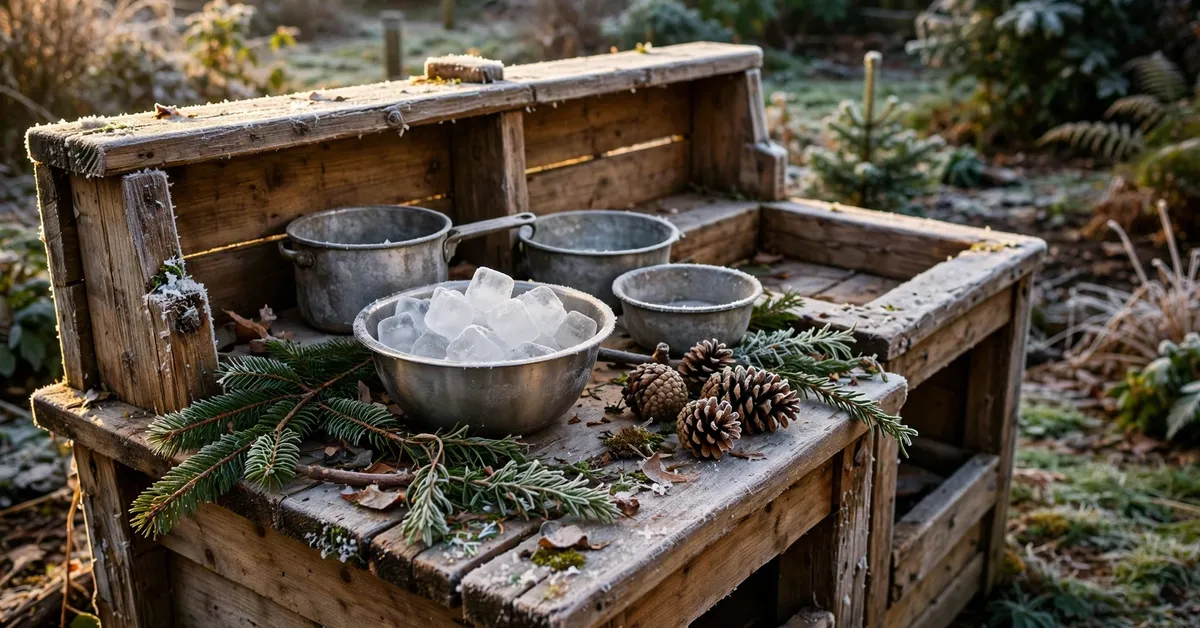
Most mud kitchens go quiet in November, and that is a shame, because winter is when a mud kitchen earns its keep in a completely different way. The mud changes. The water behaves differently. The garden fills with things summer never offers: frost, ice, pinecones, bare branches, puddles that stay for days. Children who only ever play in warm weather miss half of what mud can teach, and parents who pack the kitchen away for winter miss the easiest outdoor play of the year — no watering, no shade battles, no sun cream negotiations, just a coat, a pair of wellies and a garden that is already wet.
This is not the indoor post. My indoor mud kitchen guide covers play inside the house for the truly foul days. This post is about keeping the real, outdoor kitchen going through the cold months: how to stop the water freezing solid, how to keep the mud workable when the ground is cold, what children actually do out there in January, and when to call it and go inside for hot chocolate. Done right, winter sessions are shorter, calmer and often more focused than summer ones — and the kitchen comes out of winter in better shape than one left to rot under a tarp.
Why Winter Mud Play Is Worth the Effort
Winter changes the material itself, and children notice immediately. Cold mud is stiffer, heavier and holds its shape better than summer mud, which makes it brilliant for building: walls stand up, pies keep their edges, roads can be carved with a stick and actually stay carved. Frost adds a whole new ingredient for free. A tray left out overnight becomes an ice sheet to smash, melt and stir into potions. Puddles freeze into mirrors. The first hard frost turns an ordinary mud kitchen into a science lab without anyone planning a lesson, and the children will spend longer on a frozen puddle than on any toy you bought them.
There is a practical bonus too. Winter is when the garden is already wet, so you are not fighting evaporation the way summer demands — my mud kitchen in summer post is mostly a battle against drying out, and winter is the opposite problem, which is much easier to solve. Rain fills the water containers for you. The ground supplies mud without a hose. And because sessions are naturally shorter in the cold, children tend to play with more purpose: one good recipe, one proper build, then inside, instead of the long, drifty afternoons of July.
None of this needs special equipment. It needs a plan for water, a plan for hands, and a willingness to let the children get properly cold and muddy for forty minutes rather than expecting a two-hour summer session in January.
The Frozen Problem: Water, Mud and Hands
Everything in winter mud play comes back to three things that cold breaks: the water supply, the mud itself, and small hands. Solve those three and the rest is easy.
Water first, because it is the thing that actually stops play. A container left out overnight will freeze, and a frozen tap or pump is useless. The fixes are simple. Bring the water containers inside overnight and carry them out in the morning — a five-litre can of warm (not hot) water is the single best winter mud kitchen tool there is, and warm water in cold mud is a small miracle children will talk about for a week. Insulate the standing container if you have one: wrap it in an old towel or bubble wrap, and keep it in the sunniest corner of the garden rather than the shadiest. If your kitchen has a working tap arrangement, the options in my mud kitchen with working tap guide still apply, but drain the pipe or container at the end of the session so nothing is left to freeze and split overnight. Never use salt or antifreeze anywhere near play water, however tempting the de-icing idea sounds — both are wrong for children’s hands and for soil.
Mud second. Cold ground mud can be claggy and hard to dig, so keep a covered bucket of workable mud ready: ordinary garden soil mixed with a little sand and compost, kept under a lid near the kitchen rather than dug fresh from frozen ground. A bucket of ready mud plus a can of warm water is a complete winter session in two containers. If the mud in the kitchen itself has frozen into a solid block, a jug of warm water poured over it softens the top layer in minutes, and children love doing the pouring.
Hands third, and this is the one parents get wrong. Bare hands go numb fast in cold mud, and numb hands end play in tears. But thick ski gloves are useless for mud work — children cannot grip a whisk or pinch a pie in them. The answer is thin waterproof gloves under a pair of cheap gardening gloves, or neoprene-style gloves that stay flexible when wet. Buy them a size up so there is a layer of air, keep a dry spare pair by the back door, and build a hand-warming ritual into the session: every fifteen minutes or so, hands go into a bowl of warm water, or into pockets, or around a mug. Warm hands, warm child, longer play.
Winter Ingredients and Activities
Winter gives you a free ingredient list that summer cannot match, and the best winter sessions are built around it rather than fighting it.
Ice is the star. Freeze water in muffin tins, bowls and old containers overnight and you have ice cakes, ice gems and ice bricks for building. Children crush them, melt them in warm water, stir them into mud potions and watch the colour change as the ice melts. Frost on leaves and grass becomes decoration for pies. Pinecones, conkers left from autumn, bare twigs and evergreen sprigs are the winter pantry, and they are all free from the garden or the park. A winter “recipe” list writes itself: ice soup (mud, water and ice cubes), frost cakes (cold mud pressed into tins and decorated with frost leaves), pinecone stew, and the classic — a snow pie, when snow actually comes, made exactly like a mud pie but white.
The other winter gift is light. Short days mean low, golden light and long shadows, and a mud kitchen in winter-afternoon light looks beautiful. It also means sessions end naturally at dusk, which suits tired children and tired parents. If you want to stretch a session, a string of outdoor fairy lights over the kitchen turns a grey afternoon into an event, and children will play longer under lights than under a grey sky for reasons nobody fully understands but every parent recognises.
One honest warning: winter mud stains more. Cold, wet mud works deeper into fabric than summer dust, and light-coloured clothes suffer. The full kit and laundry system is in my mud kitchen clothes post — in winter, the rule is simply dark colours, full waterproofs, and a change of clothes waiting inside.
Clothing, Warmth and the Rhythm of a Winter Session
A winter session has a rhythm, and once you learn it, the whole thing gets easier. Short and often beats long and rare: thirty to forty-five minutes of proper play, then inside for warmth, is worth more than an hour that ends with a crying, frozen child who never wants to go out again. Two or three of those sessions a week through winter keep the mud kitchen habit alive, so that when spring comes the children walk straight back to it instead of needing to be coaxed.
The clothing system is layers, not bulk. A thermal or long-sleeved base layer, a fleece, then a waterproof coat and waterproof trousers — the waterproofs matter more than the warmth, because wet cold is what ends play, not dry cold. Wellies with thick socks beat boots, because wellies wash clean in a bucket. A hat that covers ears is non-negotiable on windy days, and a spare set of gloves by the door saves more sessions than any other single item. The full breakdown, including what not to wear and the laundry routine, is in the clothes post linked above.
Warmth also comes from the play itself. Jobs that keep children moving — carrying water, digging, stirring big pots — warm them far better than standing and decorating. If a child goes quiet and still in the cold, that is the signal to switch them to a carrying or digging job, or to call the session. And the end of a winter session deserves a ritual of its own: hands washed in warm water at the outside tap or in a bowl by the door, muddy kit left in the porch, hot drink inside. Children who know the warm ending is coming will play harder in the cold middle.
Safety and When to Come Inside
Winter safety is mostly about cold and ice, and it is straightforward once you name it. Watch hands and cheeks: white, waxy-looking skin or a child who stops complaining about the cold (because they have stopped feeling it) means inside, now, for warming — not in ten minutes. Ice is slippery as well as fascinating, so the ground around the kitchen needs a grit or mat path if it ices over, and frozen puddles are for looking and smashing with a stick, not for running across. Frozen mud is hard mud: no throwing frozen lumps, ever, because a frozen mud ball is effectively a stone. The standing safety rules in my mud kitchen safety checklist apply in winter exactly as in summer — fresh water daily, soil of known origin, no drinking the play water — with cold added on top.
There are also days to skip. Driving rain with a cold wind, ice on every surface, or a child who is already tired or sniffly are all good reasons to use the indoor version instead. Nobody earns anything from a miserable session, and one bad frozen experience can put a child off the kitchen for weeks. The kitchen will still be there tomorrow, and so will the mud.
Finally, look after the kitchen itself through winter, because a wooden kitchen left wet and ignored from November to March is a kitchen you will be rebuilding in April. Empty containers so they cannot freeze and split, tip out standing water, and give the wood its annual oil before the worst weather — the full routine is in my mud kitchen maintenance guide. Twenty minutes in late autumn saves a spring of repairs, and a kitchen that survives winter intact is a kitchen children trust to come back to.
FAQs
Can children play with a mud kitchen in winter?
Yes, absolutely — with warm water, warm hands and shorter sessions. Winter mud play is some of the best mud play there is: stiffer mud for building, ice as a free ingredient, and a garden that is already wet. The adjustments are small (warm water carried out, gloves that grip, forty minutes instead of two hours) and the payoff is a kitchen habit that survives until spring.
What do I do when the mud kitchen water freezes?
Bring containers inside overnight and carry warm water out in the morning — that alone solves most frozen-water days. Insulate a standing container with a towel or bubble wrap, keep it in the sunniest spot, and drain taps and pipes at the end of the session so nothing is left to freeze and split. Never add salt or antifreeze to play water.
Is winter mud play safe for toddlers?
Yes, with the same rules as any toddler session plus cold awareness: a low, stable setup as in my mud kitchen for toddlers guide, warm waterproof clothing, gloves they can actually grip in, and an adult watching for cold hands and cheeks. Toddler sessions in winter should be the shortest of all — twenty to thirty minutes of proper play beats an hour that ends in tears.
What should children wear for winter mud play?
Layers, not bulk: thermal base, fleece, waterproof coat and trousers, wellies with thick socks, a hat that covers ears, and thin waterproof gloves under gardening gloves. Keep a dry spare pair of gloves by the door. The full kit list and laundry routine are in my mud kitchen clothes post.
Does a wooden mud kitchen survive winter outdoors?
Yes, if it is looked after: empty the containers, tip out standing water, keep it out of standing puddles, and oil the wood before the worst weather. A kitchen on feet or slabs, rather than sitting in wet grass, survives winter far better. The full seasonal routine is in my mud kitchen maintenance guide.