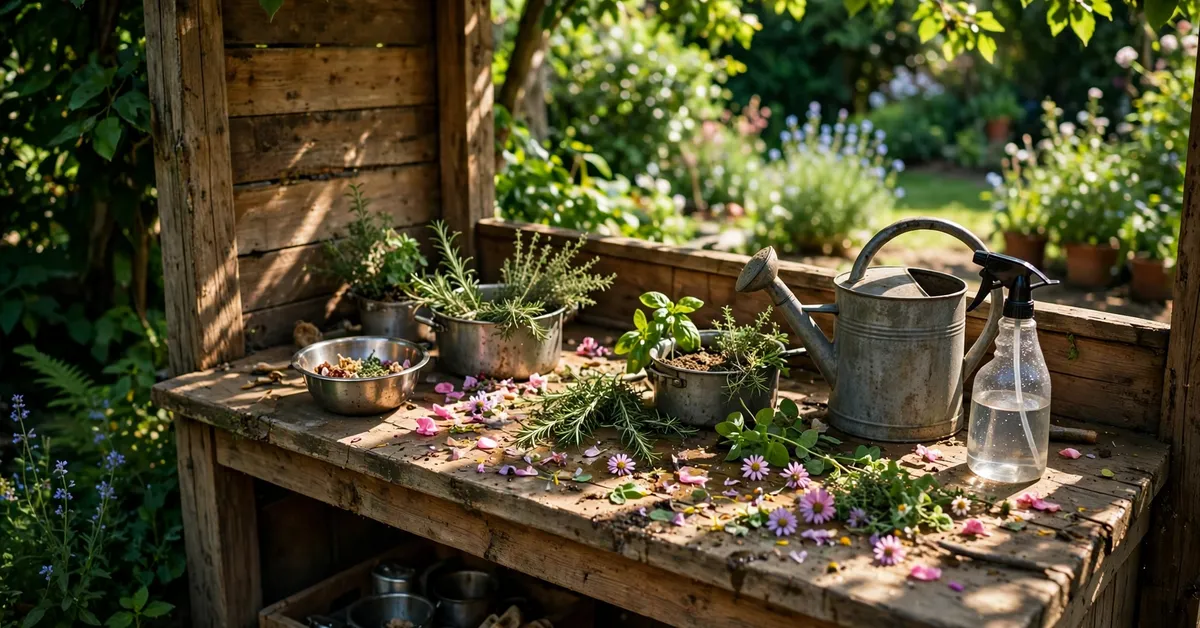
Summer is mud kitchen peak season, and it is also the season when a mud kitchen is hardest to run. That sounds backwards until you have watched a July session: the mud dries to dust in an hour, the water containers go green by lunchtime, the worktop is too hot to touch, and the children are either sunburnt, bitten, or both. Winter’s problem is cold; summer’s problem is that everything dries out, heats up and needs managing. The good news is that summer is also when mud play is at its best — long light, warm water, flowers and herbs everywhere, and children who will happily play for hours if the setup lets them.
This post is the summer system: shade first, water second, mud third, and the sun-safety and bug rules that keep a long session enjoyable instead of ending it early. If your problem is wet weather rather than heat, my mud kitchen in the rain post covers that. If your problem is cold, my mud kitchen in winter post covers that. This one is for the hot, dry, glorious weeks when the mud kitchen should be the best thing in the garden — and usually is, once you stop it drying out.
Shade First: Siting a Summer Kitchen
Everything in summer starts with shade, because a mud kitchen in full sun is a mud kitchen nobody uses after ten in the morning. Dark worktops and metal bowls absorb heat fast, and a child standing on a sun-baked surface with a metal ladle learns about heat conduction in the worst possible way. If your kitchen is moveable, even slightly, shift it into dappled shade for the summer — under a tree, beside a fence that shades the afternoon sun, or anywhere that catches the morning light and escapes the worst of the afternoon. If it cannot move, shade it: a garden umbrella clamped to a post, a cheap shade sail strung above, or even a washing line with an old sheet thrown over it all work, and children love a roof over their kitchen anyway.
Timing matters as much as shade. The best summer sessions are morning (before about 11) and late afternoon (after about 4), when the light is kinder and the heat has dropped. Midday summer play is possible in shade with hats and water, but it is shorter, thirstier play, and the mud dries fastest exactly when the sun is highest. The general siting principles — drainage, level ground, distance from the house — are in my mud kitchen setup guide; summer adds one rule on top: never site a summer kitchen where it catches the full afternoon sun with no shade option.
One more shade note: shade moves. A spot that is shady at 9 a.m. can be full sun by 2 p.m., so watch your kitchen across a day before deciding its summer home. A kitchen that is perfect in June shade can be miserable in an August heatwave when the tree above it has thinned out, and a portable shade option you can move beats a fixed one you cannot.
Keeping the Mud Wet: Water Is the Whole Game
In summer, water management is the job. A mud kitchen can use astonishing amounts of water on a hot day — mixing, pouring, washing down, topping up — and the two failure modes are running out and letting it go stagnant. A rainwater butt beside the kitchen, as in my mud kitchen water butt guide, is worth its weight in summer: a private reservoir that does not care about hosepipe restrictions, sitting exactly where the play happens. If you do not have a butt, a large container filled in the morning and topped up at lunch does the same job on a smaller scale, and a second container means one can be in use while the other refills.
Mud itself needs a summer routine. Keep a lidded bucket of ready-mixed mud in the shade — soil, a little sand and compost — and damp it down in the morning so the session starts workable instead of starting with dust. Cover the kitchen’s mud trays with a board or old towel between sessions: uncovered mud in July dries to concrete by the next day, and re-wetting a baked tray takes far longer than keeping one damp. A spray bottle is the summer mud kitchen’s secret weapon — children love spraying, and a few squirts revive a drying pie far better than a dumped jug of water, which turns everything to soup.
Stagnant water is the summer health rule, and it is non-negotiable. Water drawn into the kitchen’s containers is fresh-daily water: drawn in the morning, tipped away at the end of play, never left to stand and go green between sessions. The full hygiene thinking is in my mud kitchen safety checklist — in summer, apply it harder, because warm standing water is exactly where mosquitoes breed and algae grows. A lidded container, fresh water each session, and a tip-away at the end is the whole system, and it takes two minutes.
Sun Safety, Hydration and Bugs
Summer mud play has three health jobs that have nothing to do with mud: sun, water (drinking) and insects. All three are easy, and all three get forgotten exactly when children are having the most fun.
Sun first: hats with brims, sunscreen applied before play starts (not halfway through, when hands are already muddy and nobody wants to stop), and light clothing that covers shoulders. The mud kitchen itself can help — a shaded kitchen, a hat hook by the worktop, and a rule that sunscreen goes on before the first pie, not after. Children who are muddy from the elbows down will not stand still for sunscreen, so do it at the door, before the wellies go on.
Drinking water is separate from play water, and children must know the difference: play water is never drinking water, in any season, and in summer the rule matters more because children are thirstier. Keep a named water bottle in the shade by the kitchen, and build drink breaks into long sessions — a bottle that lives in the kitchen area gets drunk from, while a bottle that lives in the house does not. The mud kitchen for toddlers guide makes the same point for small children, who dehydrate faster and complain later.
Bugs are the third job. Mosquitoes breed in standing water, which is why the fresh-daily water rule above is also the mosquito rule: no standing water, no breeding. Flies are attracted to food waste, so mud pies made with real food scraps (fruit, bread) should be tipped away at the end of the session rather than left to ferment in the sun. A citronella candle or two near the kitchen helps a little; covering up at dusk helps more. And check for ticks if you are in an area that has them — mud kitchens near long grass and woodland edges are tick territory, so a quick check after play is a sensible habit in summer.
Summer Ingredients and the Long Session
Summer is when the mud kitchen pantry is fullest, and the best summer sessions lean into it. Flower petals — rose, lavender, marigold, anything scented and safe — turn ordinary mud pies into perfumes and potions that children will make for hours. Herbs from the garden (mint, rosemary, basil) add smell and texture, and picking them is a job children love. Grass cuttings, fallen leaves, small stones and seed heads are all free, and a “summer recipe” list practically writes itself: flower perfume (petals, water, a jam jar), herb soup, petal pies, and the perennial favourite — mud ice cream, made with cold water and decorated with petals, served with great ceremony.
Ice is the other summer gift. Freeze water in containers overnight and you have ice blocks to melt into mud, ice cubes for drinks play, and a genuinely cooling ingredient on a hot day. Children will spend an astonishing amount of time watching ice melt into mud and describing what happens, which is science without anyone calling it science. And if you want a long session in heat, water play is the engine: a mud kitchen water wall or a simple pouring station keeps children cool and moving, and moving children drink more, overheat less, and play longer than children standing still in the sun.
The rhythm of a summer session is the opposite of winter’s: long, slow and sprawling, with drink breaks and shade breaks built in. A good summer session can run two hours if the shade holds, the water holds and the children have something new to make. When it starts to flag — usually because the mud has dried or the children have run out of ideas — a fresh ingredient (a new flower, a jug of cold water, an ice block) restarts it faster than any adult suggestion. Keep a few surprises in reserve for the second hour, and the kitchen will run itself.
Looking After the Kitchen Through Summer
Heat and water are hard on a wooden kitchen in a different way from winter cold. Sun bleaches and cracks unprotected wood, constant wetting and drying opens joints, and a kitchen that is soaked every day and baked every afternoon ages fast. The fixes are small: oil the wood before summer starts (the same annual coat as in my mud kitchen maintenance guide, timed for spring), keep the kitchen out of standing water even in summer — a wet patch under the kitchen breeds rot faster in warm weather than in cold — and cover it with a breathable cover or board when a heatwave is forecast and nobody will play. A plastic sheet that traps moisture underneath is worse than no cover at all; shade cloth or a wooden board is better.
Metal parts need a summer check too: bowls, taps and ladles left in the sun get hot enough to surprise small hands, so keep metal tools in the shade or in a bucket of water, and check the worktop temperature before a session the way you would check a car seat in July. None of this is dramatic. It is the same twenty-minute seasonal routine as winter, done in spring, and it is the difference between a kitchen that lasts three summers and one that lasts ten.
FAQs
How do I stop mud kitchen mud drying out in summer?
Keep a lidded bucket of ready mud in the shade, damp it down each morning, cover trays between sessions, and give children a spray bottle — a few squirts revive drying mud far better than a dumped jug. Shade over the kitchen matters more than anything: mud in shade dries in hours, mud in sun dries in minutes.
What time of day is best for summer mud play?
Morning before about 11 and late afternoon after about 4, when the heat has dropped and the light is kinder. Midday play works in shade with hats and drink breaks, but it is shorter, thirstier play, and the mud dries fastest at midday.
How much water does a mud kitchen use in summer?
A lot — mixing, pouring and washing down on a hot day can run through tens of litres. A water butt beside the kitchen, as in my water butt guide, is the simplest answer; otherwise fill a large container in the morning and top it up at lunch. Whatever the supply, play water is fresh daily and tipped away at the end of the session.
Is it safe for children to play in a mud kitchen in a heatwave?
In shade, with hats, sunscreen, drink breaks and short sessions, yes — but use judgment. Above about 30°C, keep sessions short, keep children in the shade, and watch for flushed faces, tiredness or headaches, which mean inside, water and rest. A mud kitchen is not worth a heat-exhausted child.
What about insects around a mud kitchen in summer?
Mosquitoes breed in standing water, so the fresh-daily, tip-away water rule is also the mosquito rule. Tip away food-based pies at the end of the session so flies are not attracted, and check for ticks after play if your garden borders long grass or woodland.