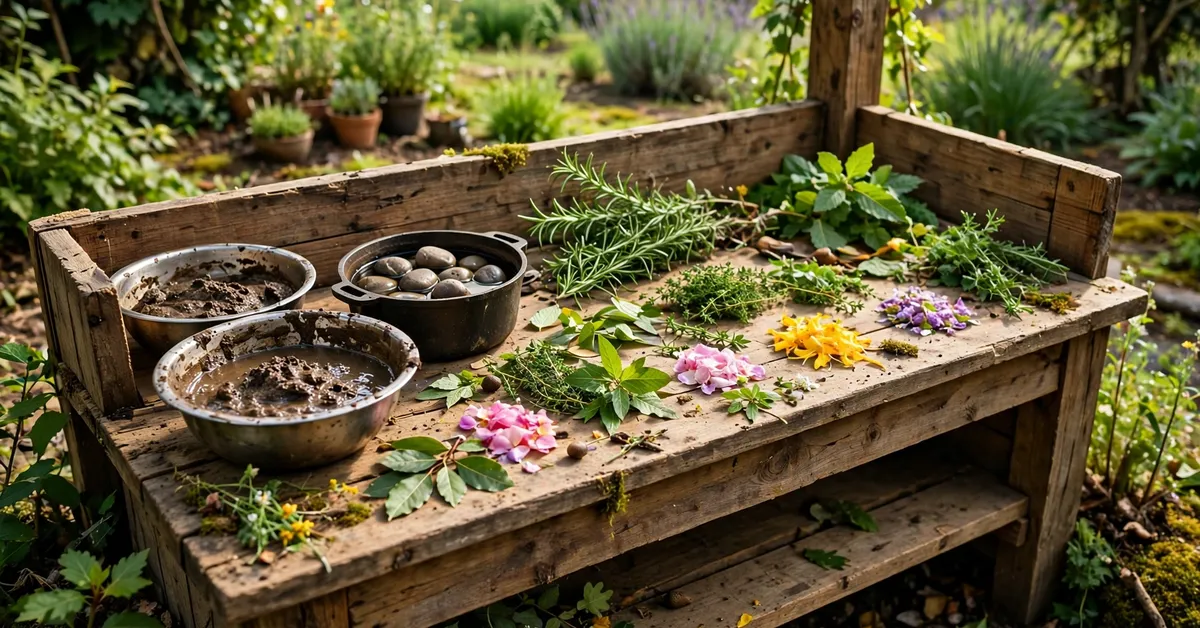
Every mud kitchen eventually becomes a café, and every café needs a menu. These fifteen “recipes” are the ones on rotation at our house — each is really just a prompt: a name, a handful of garden ingredients and a simple method a child can follow or joyfully ignore. That structure is what makes them work. A bowl of mud is a bowl of mud; a bowl of mud made to a recipe, stirred six times and garnished with a petal is stone soup, and it will be served to you with enormous ceremony.
A note on ingredients: everything here comes from the garden, the kitchen scrap drawer or a bag of topsoil. Nothing exotic, nothing bought — the whole menu can be restocked in a five-minute wander with a bucket.
First, the Safety Bit (Short, I Promise)
- Nothing gets eaten. These recipes are pretend food. Say it cheerfully and often: “mud kitchen food is for teddies, not tummies.” Check nothing in the mix is genuinely hazardous — no berries from shrubs you can’t identify, no mushrooms, nothing that held chemicals.
- Wash hands afterwards, every time. Soap and warm water (or a good scrub under the tap) at the end of the session, and before any real snack. It takes thirty seconds and it’s the habit that makes mud play easy to say yes to.
- Fresh water daily. Tip out yesterday’s potions; a fresh fill each session keeps everything sweet.
The Classics
1. Stone Soup
The founding recipe of every mud kitchen, based on the old folk tale — a magic stone, plus whatever the garden provides.
Ingredients: 3–4 smooth pebbles (the magic stones) • water • mud • grass “herbs” • any vegetables the garden can spare (fallen leaves, a dandelion, one brave carrot top) Method: Fill the pot with water, drop in the stones one at a time with a wish each. Stir, add ingredients in order of fanciness, stir again, and taste (pretend!) with the big spoon. Serve in bowls with a stone in each — the stone is the prize. Chef’s tip: It improves with every ingredient a guest “donates”. Ask each visitor to add something; that’s the story working as intended.
2. Leaf Tea
Ingredients: Large soft leaves (safe, common garden leaves — nothing from shrubs you can’t name) • water • petals for colour Method: Tear the leaves into a teapot of water, swish, and leave in the sun for ten minutes to “brew”. Pour into cups through a sieve. Different leaves make different teas — mint leaves from the herb patch make the one that actually smells like tea. Chef’s tip: A warm-water version on a chilly day (from the tap, not the kettle) steams dramatically and feels like the real thing.
3. Mud Pies
The signature bake. This is the short version — the full deep-dive is below.
Ingredients: Thick mud (more soil, less water) • sand for “flour” • petals, pebbles and leaves for decoration Method: Mix mud to a dough — it should hold a shape and drop off the spoon slowly, not pour. Press into a muffin tin, pie dish or silicone cases. Turn out, decorate generously, and line up on a board to “cool”. Go deeper: Crumbly edges, swampy middles and the exact mud consistency that turns out perfectly every time are all in my full mud pie recipes guide — including the two-layer pie and the birthday version with stick candles.
4. Flower Salad
Ingredients: Petals (marigold, dandelion, daisy — common garden flowers only) • soft leaves • grass clippings • a squeeze of water Method: Tear everything into a big bowl, toss with two spoons like a television chef, and “dress” with a drizzle of water from a height. Serve on leaf plates. Chef’s tip: This is the prettiest recipe on the menu and the one adults get photographed holding. Embrace it.
5. The Potion Bar
Ingredients: Water in several cups and bottles • petals, herbs (mint and lavender are the show-offs) • grass • a drop of mud for “the dark potion” • glitter-substitutes: sand, tiny pebbles, flower heads Method: Set out the ingredients laboratory-style. Each potion needs a name, a colour and a power. Stir clockwise for good spells. Bottle the best ones (washed-out plastic bottles with lids) and label with chalk on slate or a sticker. Chef’s tip: Freeze a flower or two in ice cubes overnight and drop them in the next day — melting a flower out of ice buys you a quiet ten minutes.
6. Muddy Cappuccino
Ingredients: Mud and water for the “coffee” • very frothy soapy water or whisked mud-and-water foam for the top • a dusting of dry soil or sand as “cocoa” Method: Half-fill a cup with dark mud-water. Whisk a bowl of water with a drop of washing-up liquid (adult adds the drop) until it foams, spoon the foam on top, and dust with dry soil through a sieve. Serve on a saucer, immediately, with confidence. Chef’s tip: The whisking is the whole game. Set a timer challenge: who can make the tallest foam?
7. Berry Crumble
Ingredients: Fallen berries foraged from the garden floor (pretend eating only — or use pebbles and petals as the berries) • dry soil and sand “crumble” • leaves as the dish lining Method: Line a ramekin or small dish with leaves, add the “berries”, sprinkle crumble mixture over the top with your fingers — rub it in like real crumble topping. Bake in the sunniest spot in the garden for one whole song. Chef’s tip: If real blackberries are in season, a version with actual fruit in actual bowls, made indoors afterwards, makes a brilliant full stop to the session.
8. Petal Perfume
Ingredients: Rose petals or lavender (the scented ones matter) • water • a small bottle or jar with a lid Method: Squash petals gently into the water with the end of a spoon — bruising them releases the scent. Leave the jar in the sun for the afternoon, strain through a sieve into the bottle, and present it to the most important person available. Dabbing behind ears is traditional. Chef’s tip: Perfume made on Monday smells strongest on Wednesday. A row of past perfumes on the shelf is a point of great pride.
9. Stone Soup’s Rival: Pebble Porridge
Ingredients: Sand and fine gravel • water • a pinch of mud for colour Method: Stir sand and water in a saucepan until it looks like porridge — this takes longer than expected and is strangely absorbing. Serve in bowls with a pebble “raisin” on top. Goldilocks testing (too hot, too cold) is mandatory and takes three bowls.
10. Leaf Wraps
Ingredients: The biggest soft leaves you can find • mud “filling” • flower petals and grass for seasoning Method: Spoon a blob of mud into the centre of a leaf, season, fold the leaf over like a parcel and line them up on a tray. Steaming (a splash of water and a lid on top for one minute) is optional but very professional.
11. Fairy Cakes
Ingredients: Mud dough (recipe 3 consistency) • silicone cupcake cases • petals, tiny pebbles, grass “sprinkles” Method: Press dough into each case, level the top with a butter knife, decorate each one differently — a café sells variety. Display on a cake stand or flat board and open the shop.
12. Swamp Smoothies
Ingredients: Water • green leaves blended by hand (torn small and squashed) • mud for thickness Method: Everything into the biggest jug, stir violently, pour into cups through a sieve for the “smooth” version or skip the sieve for “chunky style”. A leaf on the rim of each cup. Disgusting-looking is the goal — score out of ten awarded by the chef.
13. Acorn Soup
Ingredients: Acorns, conkers or pinecones (autumn) — or pebbles the rest of the year • water • herbs Method: Like stone soup, but the acorns must be counted in one at a time and counted out again at serving. Excellent for children who like numbers with their lunch.
14. Ice Cream Sundaes (Summer Special)
Ingredients: Pale sand or light soil for “vanilla” • dark mud for “chocolate” • petals as sprinkles • a wafer substitute: a flat leaf or a real ice-cream cone that’s past snack duty Method: Scoop balls of each flavour into a bowl or cone (a spoon dipped in water makes rounder scoops), layer them, add sprinkles and a berry-or-pebble cherry. Serve before it “melts” — about four seconds in July, plenty of time in October.
15. The Chef’s Special (Your Child’s Invention)
Leave a blank page in the menu. The best recipe at our kitchen — “Dragon Stew”, involving one stick, unspecified magic and a great deal of stirring — was invented by a four-year-old and has been made, identically, about ninety times. When your chef invents theirs, write it on the menu board. Which brings us neatly to presentation: a chalkboard menu makes the whole café feel real, and there are fifteen ways to make one in my post on mud kitchen signs — including the ten-minute printable version.
Making It a Café: Two Small Upgrades
- A menu board. Chalk on slate or a small chalkboard, listing three of today’s recipes. Children who can’t read yet will still “read” it to customers with total confidence.
- Order-taking. A stub of chalk and a flat stone (or notebook for older chefs) at the counter. Orders get written, cooked, served and complained about — a full afternoon’s play from a stub of chalk.
FAQs
Are mud kitchen recipes safe? Nothing gets eaten, right?
Right — everything here is pretend food, and that’s the rule to set on day one: mud kitchen food is for teddies, not tummies. Use only common garden ingredients you can identify (no unknown berries or mushrooms), tip out old water daily, and wash hands with soap after every session. With those habits in place, mud play is about as risky as the rest of gardening.
What age are these recipes for?
The simple ones (stone soup, flower salad, pebble porridge) work from about 18 months with supervision — mostly pouring and stirring. The more theatrical recipes (cappuccino foam, petal perfume, café menus) suit three- to six-year-olds, who’ll run the story themselves.
What if I don’t have a garden full of ingredients?
A bag of topsoil, a bunch of supermarket herbs on its last day, petals from one bunch of flowers and a bucket of pebbles from a garden centre covers the whole menu. Windowsill and balcony chefs manage fine — the recipes care about mixing and naming, not acreage.
How do I keep the recipes feeling new?
Rotate three things: the menu (swap two recipes a month), the ingredients (seasons do this for you — acorns in autumn, ice in summer) and the café itself (a menu board, a new sign, a grand “reopening”). Children repeat favourites endlessly; novelty is for the adults watching.
Can these be played without a mud kitchen?
Yes — a washing-up bowl, a spoon and a patch of ground will run most of this menu. The kitchen gives it a home and a counter to serve from, but the recipes themselves are portable to any garden, park trip or allotment afternoon.