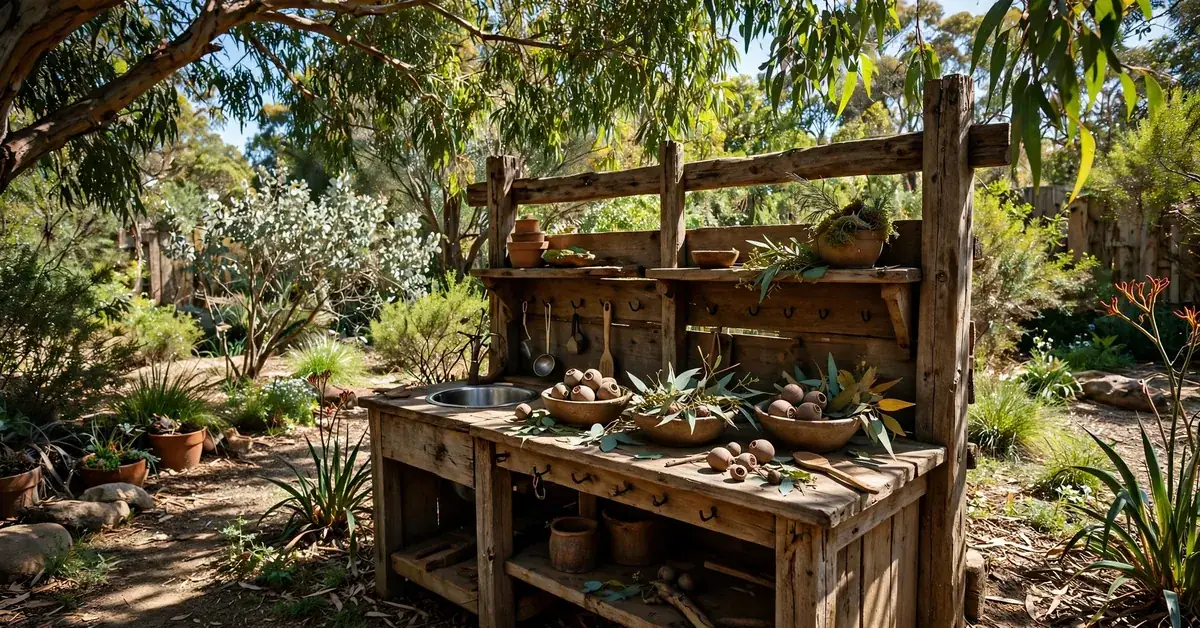
If you’re reading this in Sydney, Brisbane, Perth or Auckland, you already know the problem: nearly every mud kitchen guide on the internet — this site included — is written for the other half of the planet. The northern guides tell you to winterise your kitchen in October. In October, you’re doing the opposite. They build up to International Mud Day on 29 June as the height of summer. For you, that’s mid-winter, and somebody at school will still insist on celebrating it.
So here is the flipped version, written properly: how mud kitchen season actually runs in the Southern Hemisphere, the spring setup that matters in AU and NZ gardens (shade first — your sun is not our sun), water-wise play for dry springs and restriction rules, the native ingredients worth collecting, and the plants and garden visitors to plan around. The kitchen is the same. The calendar, the sun and half the rules are not.
Your Season, Honestly Mapped
- September to November — spring, your ramp-up. This is your March-to-May: the setup season, the building season, the first long afternoons. Everything the northern sites publish in spring applies to you now, six months out of step.
- December to February — summer, your peak. The longest, hottest play of the year, with a catch the north doesn’t have: peak mud season collides with peak UV and peak heat. Sessions move to mornings and shade. Christmas lands here too, which makes the gift maths completely different (more below).
- March to May — autumn, the gentle season. Warm soil, cooler air, often the best mud of the year. Northern “autumn ideas” content is written for your autumn too — the only season that arrives with the same name at both ends of the planet, six months apart.
- June to August — winter, the quiet months. Mud Day (29 June) sits here, absurdly and delightfully. Short, bright winter sessions with warm water work beautifully; the rest of the time, the kitchen wants the same care northern kitchens get in their December — and my mud kitchen maintenance routine covers it, just read it in June.
Spring Setup: Shade Is Not Optional
Northern setup advice treats shade as a comfort feature. In most of Australia, and plenty of New Zealand, afternoon sun in late spring is genuinely harsh, and a mud kitchen in full western sun will empty of children by November no matter how good it is. When you’re choosing the spot — the full framework is in my mud kitchen setup guide — reorder the priorities:
- Afternoon shade first. Under a tree’s edge, on the eastern side of a fence, or under a cheap shade sail. Morning sun is welcome; it dries the night’s damp off the worktop.
- Then water distance, drainage and sight-lines — unchanged from the northern version, in that order.
- Hat and sunscreen live at the kitchen, because a child deep in a café storyline will not come in to be reminded, and “slip, slop, slap” applies to chefs.
One more northern habit to unlearn: their spring advice assumes rain is coming to fill things. In much of Australia, spring is when you start watching the sky the other way.
Water-Wise Mud Play (For Dry Springs and Restriction Rules)
Mud kitchens run on remarkably little water — a session uses a bucket or two, not a sprinkler’s worth — but in a dry spring, under water restrictions, the habits matter, and honestly they’re good habits anywhere:
- Keep a dedicated mud supply, not a digging free-for-all. The lidded-tub system from my guide to how to make mud for a mud kitchen — a pre-mixed dry soil-and-sand store, scooped out per session — means every session starts measured instead of hosed. A dry-store tub, topped up twice a season, is the whole water budget made visible.
- Small water, refilled, beats big water standing. A 10-litre tap container at the kitchen instead of a full reservoir: less carried, less wasted, and it enforces the fresh-water rule anyway.
- Spent water goes on the garden. Session water — mud and all — goes onto flower beds and the base of trees, never down a drain. Your garden will vote for this policy.
- Rainwater tank water is fine for mud play (it’s not being drunk; hands are washed after, as always). If your local restrictions are strict, check whether hand-watering rules cover play containers — in most places a child’s bucket sits comfortably inside the allowance, but the check costs nothing.
The Garden Visitors Clause
Northern safety advice worries about cats. You have cats too, and the fresh-water and lidded-tub rules in my mud kitchen safety checklist handle them. Your edition has two extras, and both are managed with calm and routine rather than alarm:
- Check before play. A ten-second look over the kitchen each session — under the worktop, inside stored bowls, in the leaf litter beside it — for anything that’s moved in overnight. Shake out stored gloves and gumboots as a household habit. This is standard practice in much of Australia for everything from sandpits to shoe racks; the mud kitchen just joins the list.
- Keep the area tidy. Short grass around the kitchen, no food scraps left in bowls, containers emptied and inverted — the same tidy-up routine as everywhere else quietly removes the reasons anything visits in the first place. A kitchen that’s used daily and reset nightly is a kitchen nothing moves into.
Native Ingredients Worth Collecting (and the Ones to Avoid)
The northern ingredient lists say acorns and conkers. Yours are better:
- Gumnuts and gum blossoms — the classic Australian café stock; fallen blossoms make superb “herbs” and the nuts are currency in any shop game.
- Banksia cones — nature’s cheese graters and corn cobs, practically indestructible.
- Bottlebrush flowers — they are, in fact, brushes. Also vivid colour in potion water.
- Pohutukawa and kowhai flowers (NZ) — seasonal colour for potions and pie tops, collected from the ground after they fall.
- Sand, shells and smooth beach pebbles if you’re coastal — the recipe posts adapt happily.
And the avoid list, which matters more in AU gardens than in northern ones: oleander — planted in half the older gardens in the country, and every part of it is toxic; it should never be within a mud kitchen’s collecting range, and children need to know its flowers are not potion ingredients. Lantana berries and unidentified mushrooms after rain are in the same category. The standing rule from the safety checklist covers all of it — nothing gets picked without an adult’s yes, and the kitchen’s ingredient zone is stocked from plants you’ve identified yourself — it just carries more weight in a southern garden.
Plant the Kitchen’s Own Ingredient Border
While you’re setting up for spring, plant the ingredient supply where small hands can harvest it. A metre of tough herbs along the sunny side of the kitchen pays rent all season: rosemary (indestructible, becomes wands, stirrers and “garnish”), lavender (flowers for potions from late spring), lemon balm and mint — mint in a buried pot only, unless you want a mint garden with a kitchen in it by autumn. Add a marigold or two for petals. Everything on this list is a recognised mud kitchen ingredient in the northern guides too; it simply grows harder and longer in your climate, which means the café stays stocked months after a northern one has gone to seed. Water the border with the spent session water and the whole arrangement closes its own loop.
Looking Ahead: A Summer Christmas and a Winter Mud Day
Two dates run your year. Christmas is a summer gift for you — a mud kitchen under the tree in December opens into peak season the same week, which is why southern gift-buyers should order in November, not copy the northern rush and not wait for January sales. My mud kitchen gift guide has the budgets and choosing checks; just flip its calendar six months and ignore everything it says about Boxing Day building weather. And International Mud Day, 29 June, lands in your mid-winter: schools and kindies across AU and NZ celebrate it anyway, and so can a garden — short session, warm water in the container, gumboots, hot chocolate after. It’s the one day of the year the northern hemisphere is jealous of your version.
FAQs
When is mud kitchen season in Australia and New Zealand?
The long season runs September to May — spring setup from September, peak play through the summer holidays, and often the best mud of all in the mild autumn months. June to August is the quiet season: shorter sessions on bright days, warm water, and the winter care routine. There is no month where the kitchen must close; there are just months where it changes its hours.
How do we manage a mud kitchen under water restrictions?
Easily, because mud play is naturally frugal. Keep a lidded dry-store tub of soil-and-sand mix so sessions start with a measured scoop, run water from a small tap container (about 10 litres does a session), and pour all spent water onto garden beds rather than drains. Most restriction regimes are aimed at hoses and sprinklers; a child’s bucket or two sits inside typical allowances — but check your local rules once, since they vary by state and council.
What about snakes and spiders around a mud kitchen?
Calmly and routinely: the same tidy habits that keep any mud kitchen good — short grass around it, no food scraps, containers emptied and stored upside down, gloves and boots shaken out — remove almost all of the risk, and a ten-second look over the kitchen before each session handles the rest. Teach children the universal rule: anything found living in the garden gets looked at with an adult, never handled. Used daily and reset nightly, a mud kitchen corner is one of the least likely undisturbed hiding spots in the garden.
What’s the best shade for a mud kitchen in harsh sun?
A tree’s dappled edge is ideal — shade in the afternoon, sun in the morning to dry the worktop. Where that’s not available, a shade sail over the kitchen is the standard fix (about AU$30–$60, an afternoon to rig) and it earns its keep from October onward. Avoid placing a kitchen where it bakes from noon on: water vanishes, mud sets like brick, and children quite reasonably vote with their feet.
Do the northern hemisphere posts on this site still apply to us?
Almost all of them — the build guides, dimensions, water systems, recipes and safety rules are hemisphere-proof. Only the calendar flips: read “spring” as September, “autumn” as March, and any winter advice as June. This post exists for the handful of things that genuinely differ — sun strength, water habits, native ingredients, and a Christmas that arrives in summer.