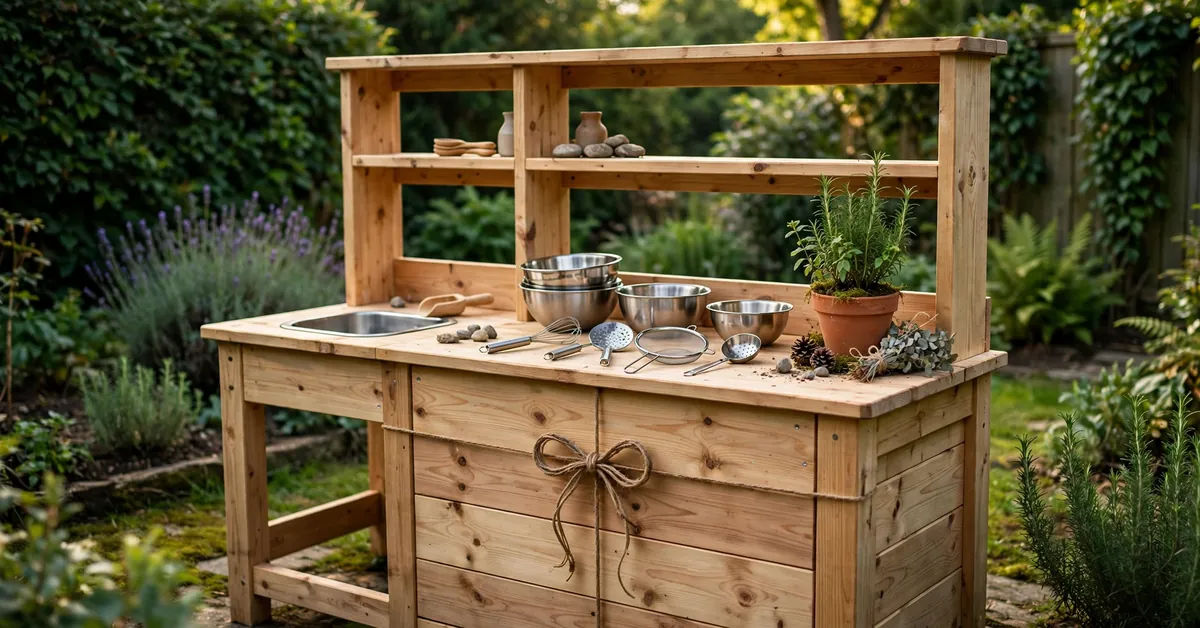
Twice a year — once before Christmas, once before our eldest’s birthday — my parents ask the same question: “What do the children actually want?” Three years ago I said “a mud kitchen” mostly to end the conversation, and it turned out to be the best gift advice I’ve ever given. That kitchen has been played with most days since. The grandparents are legends. The batteries have never needed replacing, because there aren’t any.
But buying a mud kitchen as a gift is a different job from buying one for your own garden. There’s a recipient family whose space you might misjudge, an assembly job that lands on someone on Christmas Eve, and a delivery date that matters more than usual. This guide is the gift-buyer’s version: what to check, what to spend at each level, the add-on gifts that land best (including for a child who already has a kitchen), and when to order so you’re not paying rush shipping in a panic.
Why Mud Kitchens Make Unusually Good Gifts
Most toy gifts peak in a fortnight. A mud kitchen is closer to furniture: it’s played with across years, it grows with the child (a two-year-old fills and tips; a six-year-old runs a café with prices), and it gets children outside without a screen or a subscription. For grandparents especially, it’s the rare big gift that parents genuinely welcome — if you get the four checks below right.
Before You Buy: The Gift-Buyer’s Four Checks
- Ask the parents first. A mud kitchen is a metre-plus of garden furniture, not a toy that fits in a cupboard. A two-minute conversation (“we’d love to get them a mud kitchen — is there space, and is there a style you’d want?”) prevents the only real failure mode this gift has. It costs a little surprise; it buys total success.
- Know the space. A patio corner suits a compact single-sink kitchen; a big double-sink unit needs a real garden. If you’re unsure, go smaller — a well-chosen small kitchen gets more play than a big one squeezed somewhere awkward.
- Match the age. Under-threes need low worktops (about 40–45 cm), no small parts and rounded everything — my mud kitchen for toddlers guide has the full checklist. For four-to-seven-year-olds, prioritise worktop space and a sink over decorative extras.
- Decide who’s assembling it, and when. Almost all wooden mud kitchens arrive flat-packed. Assembly is one to two hours with a drill/driver and a second pair of hands — a lovely Boxing Day project, a miserable 11 p.m. Christmas Eve one. Some sellers offer pre-assembled at a premium; for a gift to another household, “I’ll come and build it with them” is often the best version of the present.
What to Give at Each Budget
Under $50 / £40: The IKEA route, or the starter bundle
At this level, don’t buy a tiny toy kitchen — buy the beginnings of a real one. The famous route is the IKEA-based build: an inexpensive IKEA unit or table converted into a mud kitchen with a washing-up bowl and hooks — I keep the step-by-step in my IKEA mud kitchen guide, and as a gift it works brilliantly presented as “kitchen + a promise to build it together”. Alternatively, if the child already has a kitchen, this budget buys the starter bundle below, which honestly gets more cheers than hardware.
$50–$150 / £40–£120: The solid wooden kitchen
This is the sweet spot for a main gift: a proper wooden mud kitchen with a sink bowl, worktop and a shelf or two, from the reputable children’s outdoor brands. At this level you’re choosing between compact singles for small gardens and mid-size units with hob rings and storage. Wood quality and fixings matter more than painted extras — exterior screws and treated timber are what you’re paying for.
$150+ / £120+: The big present
Double sinks, working taps, pumps and generous worktops — the kitchens several children can run at once. A double sink mud kitchen is the classic grandparents-joint-gift: two stations end the queueing wars and suit siblings or cousins playing together. At this level, read the detailed comparisons before choosing — my best outdoor mud kitchen for kids roundup tests the main contenders against each other, and it’s kept gift-agnostic on purpose: this page is about giving well, that one is about choosing the model.
A note on prices: this niche discounts hard around Black Friday and again in the January sales, and barely at all in spring when demand peaks. If the gift is for a spring birthday, buying in the sales and storing the box is the single easiest saving in this whole guide.
The Add-On Gifts (Including “They Already Have One”)
Some of the best mud kitchen gifts aren’t kitchens:
- The starter kit bundle — a crate with real metal bowls, a ladle, a whisk, muffin tins, jugs and a small watering can. Use my mud kitchen accessories ideas list and buy the metal, charity-shop-friendly versions; a bundle like this costs $25–$40 / £20–£30 and outfits a bare kitchen completely.
- A working pump upgrade — for a kitchen with a plain bowl sink, a pump kit turns it into the deluxe model. It’s the single upgrade children notice most.
- A signs pack — café signs, menu boards and price lists for the child who’s moved into running a business. Printable versions pair with a cheap laminator for a gift that looks handmade-boutique.
- The ingredient hamper — a basket of dried petals, pine cones, cinnamon sticks, wooden “vegetables” and a recipe card or two. Silly, cheap, and opened with genuine delight every single time.
- The gardener’s add-on — a trowel set and a bag of bought topsoil for the dedicated mud supply, for the household whose garden gets dug up a little too enthusiastically.
Ordering and Delivery: The Dates That Matter
- Order by early December for Christmas — mid-November if the model is a popular one. This niche sells out: the good mid-price kitchens routinely go out of stock in the first week of December, and restocks land in January.
- Check the box on arrival, before wrapping. Open it, count the panels against the parts list, confirm the fixings bag is there. Discovering a missing panel on Christmas Eve is unfixable; discovering it on December 10th is a phone call.
- Flat-pack boxes are big and heavy. Plan where it waits (garage, not the child’s bedroom), and if it’s being delivered to the recipient family’s house, warn them — a surprise two-metre box on the doorstep spoils several surprises at once.
- Keep the receipt with the gift. Wooden outdoor products occasionally arrive with a split panel; a gift receipt makes the exchange painless and costs you nothing to include.
Presentation: Making a Box of Timber Feel Like a Present
A flat-pack box under the tree underwhelms for exactly eleven seconds — then you fix it in the card. The version that worked for us: the kitchen box, a small wrapped starter bundle on top (one bowl, one whisk, a menu sign), and a card reading “Café [Child’s Name] — opening Boxing Day, builders provided”. The child unwraps something to hold, the opening becomes an event, and the assembly — with grandparents, hot drinks and a small chef supervising — turns out to be part of the gift rather than a chore after it.
Two More Routes: Second-Hand and Handmade
Second-hand is the budget gift nobody should be embarrassed about. Wooden mud kitchens appear constantly on local selling groups, especially in autumn when families clear gardens — often at a third of the new price, sometimes barely used. Check before you gift: legs and feet for soft, rotten wood (press with a thumb; sound wood doesn’t dent), all panels and fixings present, and no splintered worktop edges. An hour with sandpaper and a coat of oil makes a good used kitchen genuinely giftable — run the checks in my mud kitchen safety checklist over it first, exactly as you would your own.
Handmade is the premium version of the same idea. If you’re handy — or the family’s grandparent-with-a-workshop — a kitchen built from proper plans beats anything in a box for sentiment, and the materials for a pallet build can cost less than the cheapest shipped option. My mud kitchen DIY plans are the place to start; build it in November, let the finish cure, and deliver it built, which also solves the assembly question at a stroke. A small brass plaque or the child’s café name painted on the backboard turns it from a present into an heirloom-in-waiting. Sentimental? Entirely. Effective? Every single time.
FAQs
What age is a mud kitchen a good gift for?
Roughly 18 months to eight years, with the sweet spot at two to six. For under-threes, choose a low, simple kitchen with no small parts and check the worktop height (around 40–45 cm) against the child. For five-plus, prioritise space and features — double sinks, pumps, serving shelves — because the play becomes elaborate café and shop games that run for hours.
How much should you spend on a mud kitchen gift?
The honest sweet spot is $50–$150 / £40–£120 for a solid wooden kitchen that will last years. Under that, give the IKEA-based build or a starter-kit bundle rather than a flimsy toy version. Over $150 / £120 you’re paying for size, double sinks and working water features — worth it as a joint family gift for siblings, unnecessary for a single toddler.
Is assembled or flat-pack better for a gift?
Flat-pack, in almost every case — assembled kitchens are bulky to deliver, harder to hide, and usually carry a hefty premium. The exception is a gift for a household with no tools and no DIY confidence, where arranging assembly (by you, as part of the gift, or via the seller’s service) matters more than the format. Either way, check the parts on arrival, not on the day.
When should I order a mud kitchen for Christmas?
By early December at the latest; mid-November for popular mid-price models, which reliably sell out in the first week of December. Buying during Black Friday sales saves real money in this niche, and the box stores fine in a garage for a few weeks. Spring-birthday gifts are cheapest bought in the January sales — demand, and prices, peak from March.
What do you buy a child who already has a mud kitchen?
Upgrades and ingredients, not another kitchen: a pump kit to give the sink working water, a starter bundle of real metal utensils and bowls, a signs and menu pack for café play, or an ingredient hamper of petals, cones and spice-jar “stock”. These cost $25–$50 / £20–£40 and reliably get as much excitement as the original kitchen did — sometimes more, because the child already knows exactly what they’re for.